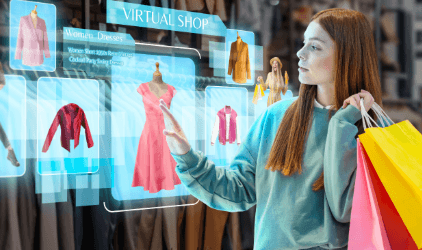
Fashion and Augmented Reality Shopping

Augmented reality for fashion blends digital overlays with real-world cues, enabling shoppers to visualize garments in their own space. The tech relies on precise alignment, real-time rendering, and accurate fit simulations. This convergence reshapes decision-making, linking psychology with merchandising in data-driven ways. As retailers experiment with immersive try-ons and privacy-conscious design, the potential shifts in behavior and strategy are notable—and the next move may redefine how customers discover style. The stakes build as outcomes hinge on perception, performance, and practicality.
What AR Shopping Is and Why It Matters Today
Augmented reality (AR) shopping overlays digital information onto the real world, enabling consumers to visualize products in their own environment before purchase. This approach enhances AR perception by blending context with comparison, reduces hesitation, and accelerates decisions. Virtual mirrors extend self-assessment beyond storefronts, supporting autonomous exploration. The trend empowers freedom-seeking shoppers to curate spaces, explore brands, and democratize access to aspirational styles.
How AR Try-Ons Work: Technology Behind the Experience
How do AR try-ons translate real-world cues into precise digital overlays that users can interact with in real time? The mechanism blends camera input with tracked anatomy, lighting cues, and geometry, delivering adaptive virtual garments. AR asset pipelines streamline asset creation, while real time shading ensures believable surface interaction, shadows, and color fidelity, enabling fluid, unconstrained fashion experimentation.
Consumer Psychology and Retailer Impact of AR Shopping
The integration of AR shopping reshapes consumer decision-making by aligning digital overlays with real-time behavioral signals and verified product data, enabling more informed choices without traditional sensory constraints.
In this context, consumer motivation evolves as personalization and immediacy drive engagement, while retailer impact shifts toward data-driven experiences, flexible pricing, and measurable return on investment, reinforcing a freedom-centered, tech-forward retail narrative for discerning shoppers.
Practical Steps to Implement AR Shopping (For Shoppers and Retailers)
Practical steps to implement AR shopping require a structured, user-centered approach that aligns technology with measurable outcomes for both shoppers and retailers. This framework emphasizes open-platform interoperability, iterative testing, and transparent data practices. Shoppers gain seamless product visualization and shopping accessibility, while retailers refine conversion metrics and experience design. Data privacy priorities, accessible interfaces, and clear governance ensure sustainable adoption in trend-driven, freedom-focused markets.
See also: bulletinnewsdail
Frequently Asked Questions
How Secure Is My Data in AR Shopping Apps?
Data security in ar shopping apps hinges on data encryption and robust access controls; providers emphasize user consent, transparent data use, and regular security audits to align with evolving privacy norms, offering freedom while mitigating exposure to breaches.
Will AR Try-Ons Affect Garment Fit Accuracy Over Time?
AR try-ons may gradually influence fit accuracy as devices and models drift, though designers pursue long term calibration to stabilize results; over time, calibration improvements aim to preserve consistent fit accuracy and support freedom in fashion exploration.
Do AR Experiences Exclude Non-Premium Devices?
AR experiences do not universally exclude non-premium devices, though ar device compatibility varies; premium device limitations may restrict certain features. This tech-forward analysis notes access scales with hardware, while inclusivity remains a strategic concern for broader audience freedom.
Can AR Shopping Reduce Return Rates Substantially?
AR adoption can substantially reduce returns, as visualization minimizes sizing and fit misjudgments. In tech-driven markets, retailers report meaningful return reduction, though impacts vary by category and device access, signaling a trend toward scalable AR-enabled shopping experiences.
How Do AR Fashion Ads Impact Privacy Perceptions?
AR fashion ads heighten privacy concerns, revealing how on-device sensing and data collection shape user profiles; observers note transparency gaps and consent complexities, while critics urge robust controls. The trend emphasizes freedom through opt-out settings and clear data-use disclosures.
Conclusion
AR shopping is redefining consumer engagement by merging digital overlays with real-world fit and lighting cues, enabling smarter, faster decisions. A key stat: retailers employing AR try-ons report up to a 20% lift in conversion and a 15% reduction in returns, underscoring the dual value of enhanced confidence and reduced waste. As fashion and tech converge, scalable privacy-conscious AR experiences will increasingly shape merchandising strategies, shopper expectations, and the cadence of online and in-store experimentation.